Newsletter
MARCH 2026
In This Issue
TRIBUTE
SUSTAINABILITY EFFORTS
MEDIA
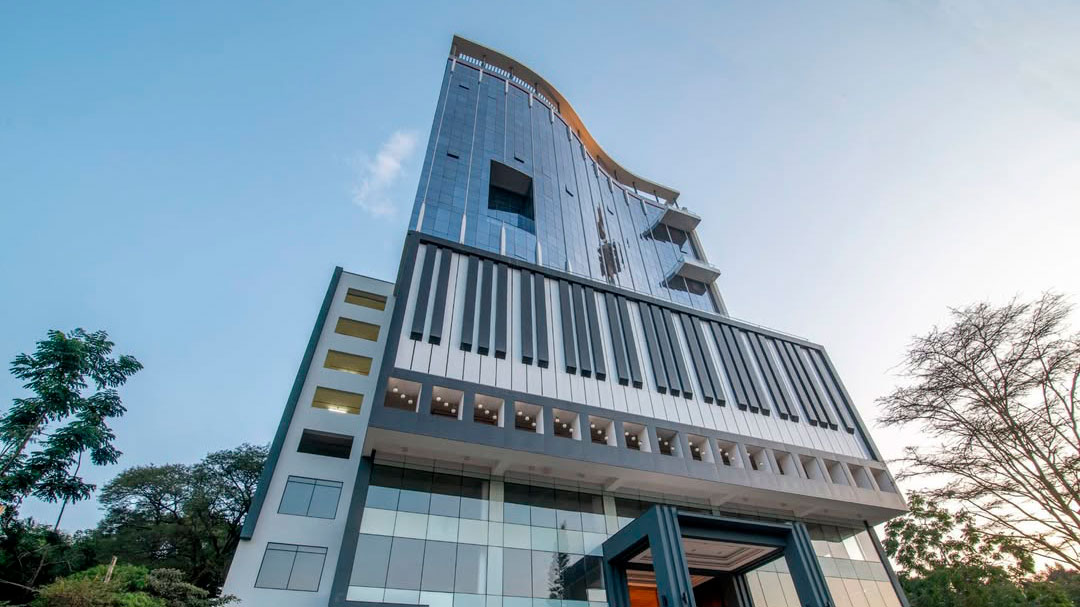
In line with our growth and our commitment to better serving our partners, our Head Office in Kenya has relocated to a new space at:
The Piano, 13th floor
171 Brookside Drive, Westlands
Nairobi, Kenya
This move brings together our sister brands; Elewana Collection, Cheli & Peacock Safaris, SkySafari, Explorer by Elewana and our sustainability arm Land & Life Foundation under one roof, enabling our teams to collaborate more efficiently, streamline support and continue delivering the responsive service you rely on.
Our contacts are: Tel: +254 20 361 6000, +254 722 206 328 / 329, Email: This email address is being protected from spambots. You need JavaScript enabled to view it.
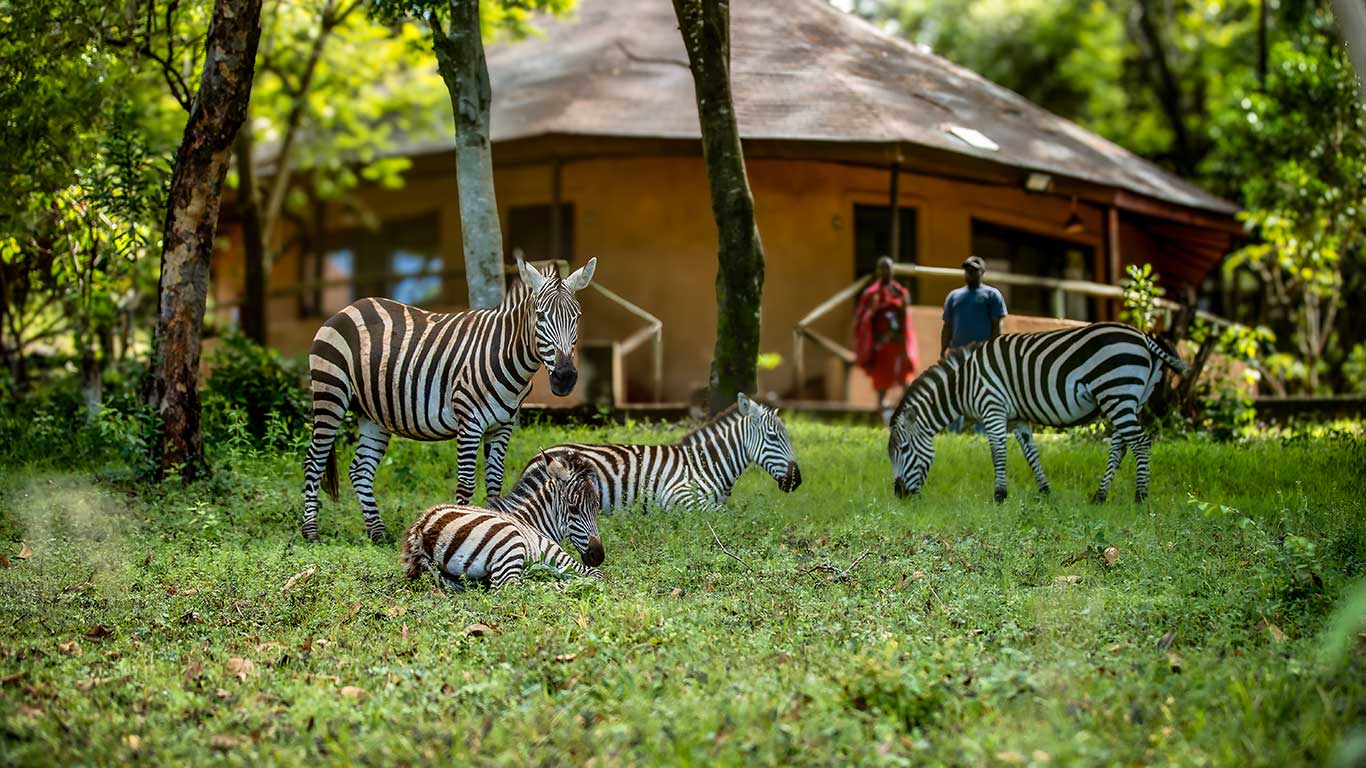
Our Masai Mara Sopa lodge is marking a double milestone this year, as we celebrate our 40th anniversary and the achievement of Gold Eco-Rating certificate. This recognition underscores our long-standing commitment to responsible tourism and environmental stewardship, reflecting continuous efforts in energy and water conservation, waste management, community engagement and wildlife protection, all while maintaining a high-quality guest experience.
We extend our appreciation to our sustainability arm, Land & Life, whose guidance and support have been instrumental in reaching this standard. Through their ongoing work with local communities, conservation partners and our lodge teams, every stay at Masai Mara Sopa Lodge continues to contribute positively to the people and landscapes that define the Mara.
We are honoured to have received a Booking.com Traveller Review Award 2026, a recognition driven entirely by our guests’ feedback. Their reviews affirm what we strive for every day; warm, attentive service and memorable stays across our lodges.
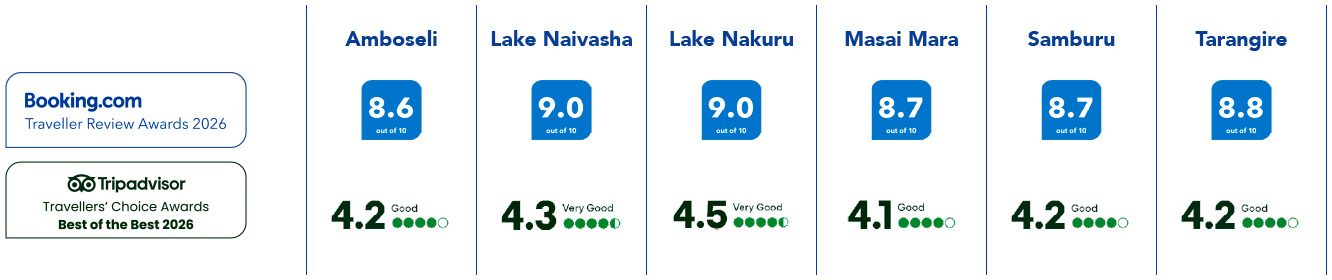
To every guest who took the time to rate and review us, thank you for trusting us with your East African journeys.
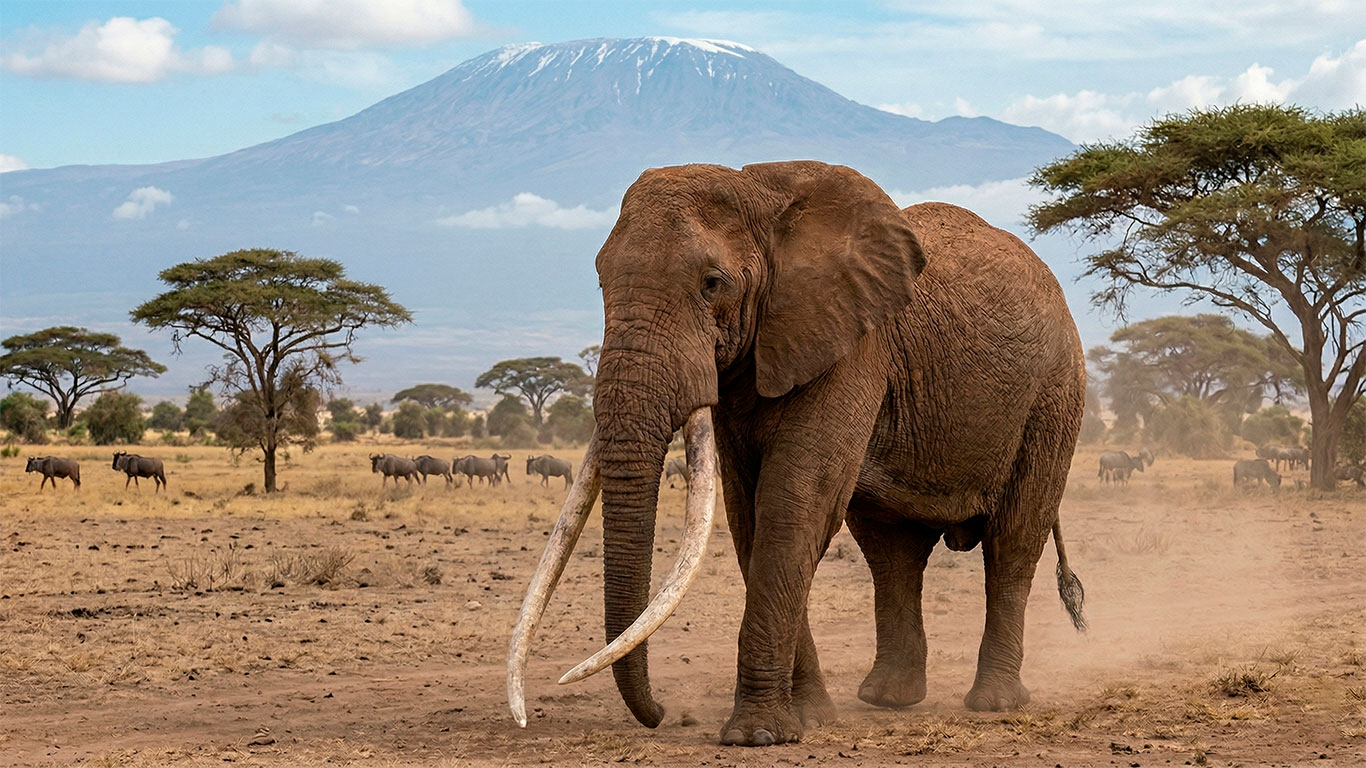
Craig was one of Africa's last remaining “super tuskers” , a rare and icon bull elephant known for having massive tusks, each weighing over 45kgs. He was a legendary figure in Kenya’s Amboseli National park, recognized for immense ground, sweeping tusks and remarkably calm, gentle demeanour around visitors and photographers.
Life and Behaviour
Origin: Born in January 1972 to mother Cassandra of the CB family. CB was a naming system to identify Elephant families that Cynthia Jane Moss, a renown American and ethnologist and wildlife researcher and ethnologist with special focus on the African elephants of Amboseli, came up with. For Craig’s family, all members’ names begin with the letter ‘C’. Craig is believed to have had a twin sister Cerise (the current matriarch in the CB family) and fathered many calves in his life.
Character: Despite his size, 6.9 feet tall and almost 7 tons heavy, he was known for being very gentle and patient, often allowing tourists to take photos and videos of him without showing aggression.
Elephant teeth: In his final days, it was noted that Craig’s last set of molars had worn down making it difficult for him to chew. Elephants have a set of 6 molars. Unlike human teeth that grow vertically, elephant molars grow horizontally at the back of their mouth and push forward over a lifetime replacing the front worn down teeth which break and fall out . It takes about 10 years to lose a set of molars. For this reason, the age of an elephant can be determined by the number of molars they possess .
The final set of the sixth molars arrive around age 30 to 40 and must last the rest of their lives, this is into their 60 to 70 years of the elephant. At this age, the herbivore cannot chew leading to death by starvation of older elephants
Elephants spend between 16-18 hours (80%) of their feeding time. An adult elephant consumes between 200 to 300kg in a day to support their massive body. This amount for food is about 5% of their body weight.
Elephant tusks are their modified incisors which grow continuously and can be broken or worn down
Key facts about Craig
Death: He peacefully died at about 3:32 AM on 3rd of January 2026 in Kitenden under the safe watch of Amboseli KWS rangers due to natural causes. It is believed that his death was likely caused by raptured intestines resulting from his inability to chew food with a worn down final set of molars. He lived in solitary during his last years.
His tusks were removed by KWS for preservation at the Museums of Kenya.
A previous super tusker of Amboseli was Tim who died on 7th February 2020 at the age of 50 due to natural causes just like Craig.
Location: He lived in Amboseli National park near the foot of mount Kilimanjaro, on the Kenyan side
Appearance: As a super tusker, his tusks were over six feet long, frequently dragging on the ground.
Legacy: He was considered a living monument to Africa wildlife and a symbol of successful conservation, having survived poaching threats for decades.
Feeding habit: Elephants are massive herbivores that spend up to 16-18 hours a day foraging, consuming 150-300kg of food daily to support their massive body.
Conservation status: In 2021, he was named an Ambassador for the Kenyan beer brand, ‘Tusker’ which highlighted his status as a national icon.
Super Tuskers in Kenya
What is a super tusker status? It is a bull not only with large tusks, but with each of the tusks weighing not less than 45kgs.
You were protected. You were respected. You will never be forgotten. Sleep softly, old friend. Your footprint may fade from the dust but your story will last forever.
Compiled by Ludi Ogot (General Manager) and Joseph Yenko - Front Office - Masai Mara Sopa Lodge
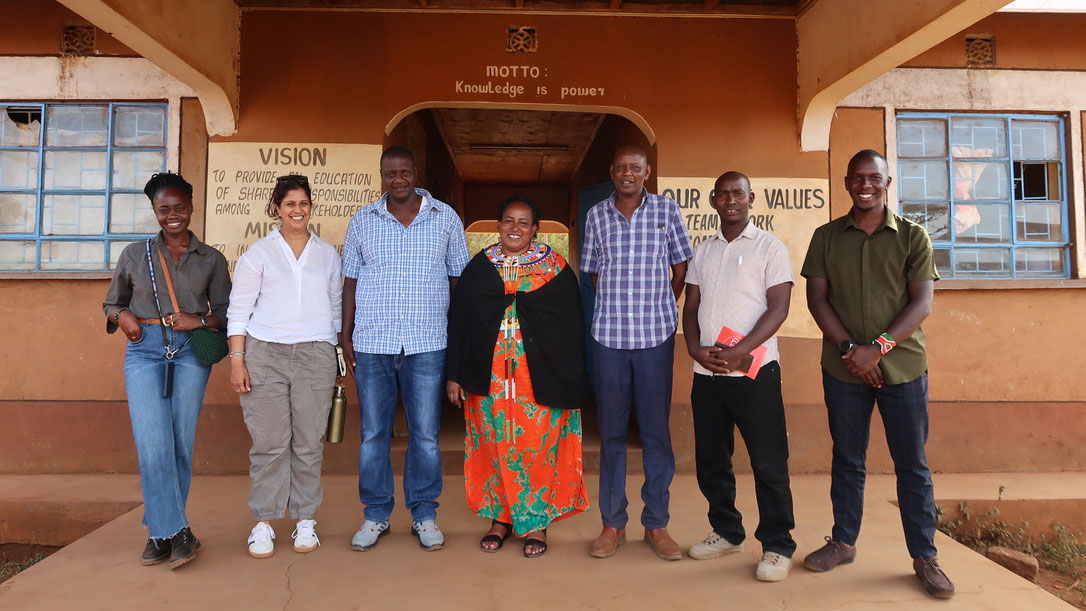
Following the ongoing growth of the Canvas for Change programme, the Land & Life Foundation visited Ol Donyo Oibor Primary School in early February 2026 to celebrate an important milestone with the students and reflect on the impact of their creativity. During the visit, 25 members of the school’s Wildlife Club received greeting cards and tote bags printed with their own artwork, each accompanied by handwritten messages of encouragement from the Land & Life team.
The initiative began in 2024 with two schools in Amboseli, in partnership with the African Conservation Centre (ACC), using art to help students explore environmental challenges affecting their communities. Student creativity has since translated into tangible support for schools: Several paintings have been produced as greeting cards and tote bags, with proceeds going towards school fees, wildlife club activities and other priority needs identified by the schools.
In May 2025, the programme expanded to the third school, Ol Donyo Oibor Primary School, with support from Amboseli Sopa Lodge. The recent visit also provided an opportunity to meet the school administration, led by their Headteacher Mr. Joseph and Wildlife Club teachers to discuss key priorities and future collaboration. Mr. Joseph highlighted that the art and conservation elements of the programme align closely with Kenya’s Competency-Based Education framework, nurturing students’ creativity, confidence, and environmental responsibility.
Looking ahead, the Land & Life Foundation shared plans to introduce its Wildlife Warrior Program at the school, further strengthening conservation learning and leadership among students. This approach reflects the Foundation’s pillars of People, Planet, and Partnerships, continuing to build resilient schools while nurturing the next generation of informed conservation stewards.